
Why Chronic Low Back Pain: Manual Therapy, Exercise, & Laser: Why the Combination Works Best!
By Dr. John Mishock, PT, DPT, DC
Low back pain is nearly universal. About 80% of adults will experience it at some point in their lives. For many, symptoms resolve within weeks. For a significant minority, they do not—and that’s when low back pain becomes chronic.
Research shows that 20–30% of patients with an initial episode of low back pain develop chronic symptoms lasting longer than three months (CJ et al. Eur J Pain). Once pain becomes chronic, recurrence is common: 60–70% of patients experience repeated flare-ups within one to two years. (Da Silva T et al. Spine. 2017) Globally, chronic low back pain is now the leading cause of years lived with disability, surpassing heart disease, diabetes, and depression. (Vos T et al. The Lancet. 2020)
When Low Back Pain Stops Being a Simple Injury
Acute low back pain is often mechanical—muscle strain, joint irritation, or short-term inflammation. Chronic low back pain is different. Over time, the condition evolves into a biological and neurological problem rather than just a structural one.
Key contributors include:
- • Persistent low-grade inflammation, which alters tissue chemistry
- • Reduced microcirculation, limiting oxygen and nutrient delivery
- • Muscle guarding and stiffness, particularly around the spine, hips, and sacroiliac (SI) joints
- • Peripheral nerve irritation, including frequently overlooked nerves such as the superior cluneal nerves
- • Nervous system sensitization, where pain pathways become over-responsive
At this stage, pain can persist even when imaging findings are mild or “normal.” Healing has stalled.
Why Exercise and Manual Therapy Help
Clinical guidelines consistently recommend exercise therapy as a cornerstone treatment for chronic low back pain. Systematic reviews show that exercise produces moderate improvements in pain and disability, while also reducing the risk of recurrence (Hayden JA et al., Cochrane Database Syst Rev. 2021). Exercise improves strength, coordination, movement confidence, and nervous system regulation.
Manual therapy—joint mobilization and soft-tissue techniques—adds critical short-term benefits. Studies demonstrate that manual therapy combined with exercise leads to faster pain reduction and improved mobility compared with exercise alone, particularly early in care (Coulter ID et al. Spine J.)
However, exercise and manual therapy primarily target movement and mechanics. They do not always fully address ongoing inflammation, impaired circulation, or nerve hypersensitivity, which are common in chronic cases. This helps explain why some patients improve initially, then plateau.
The Biological Role of Class IV Laser Therapy
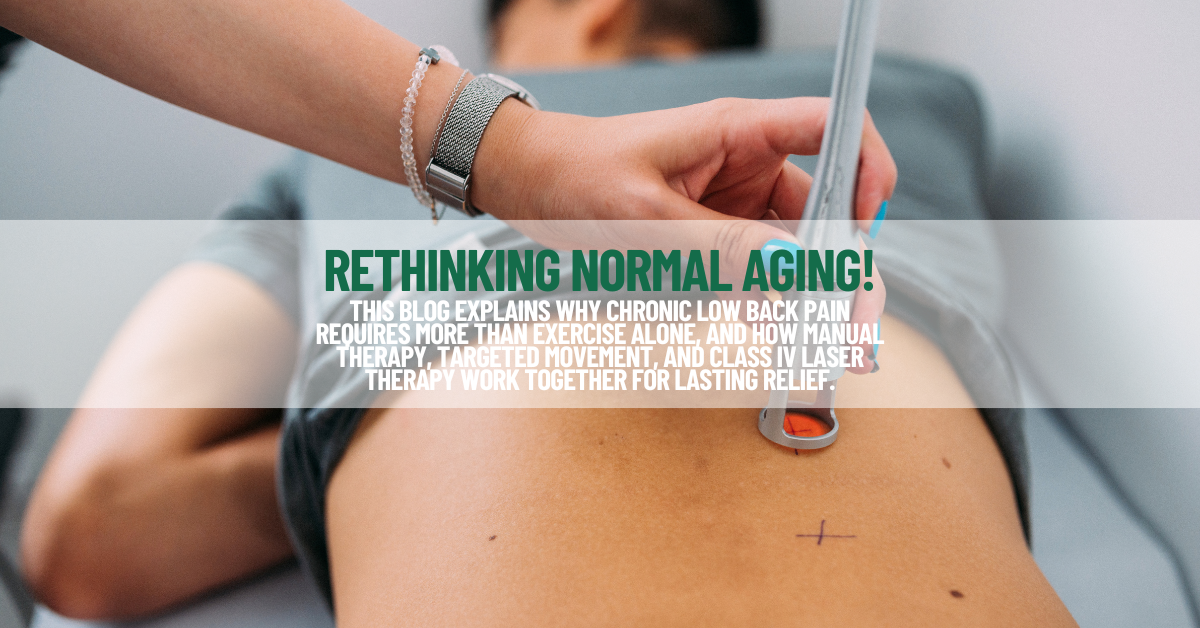
Class IV laser therapy, also called high-power therapeutic laser, delivers light energy deep into tissue, triggering photobiomodulation—a process that influences cellular metabolism and nerve signaling rather than simply masking symptoms.
Research shows that therapeutic laser can:
- • Increase ATP production within mitochondria, improving cellular energy availability.
- • Enhance local blood flow, supporting tissue repair.
- • Reduce pro-inflammatory cytokines
- • Decrease peripheral nerve sensitivity, lowering pain signaling
Clinical studies indicate that laser therapy can reduce pain and improve function in people with chronic low back pain, particularly when used in combination with active rehabilitation rather than as a stand-alone treatment. (Coulter ID et al. Spine J. 2018).
Why the Combination Works Better Than Any Single Treatment
A single factor does not drive chronic low back pain, so no single treatment reliably solves it. A combined approach works because each component targets a different layer of the problem: Manual therapy improves joint motion, reduces stiffness, and decreases protective muscle tone. Exercise therapy restores strength, coordination, and long-term resilience. Class IV laser therapy improves the biological environment, allowing tissues and nerves to heal.
Together, they address mechanics, movement control, inflammation, circulation, and nervous system sensitivity. Laser therapy, in particular, helps create the conditions that allow exercise and manual therapy to produce lasting change rather than temporary relief.
Who Benefits Most
This integrated approach is beneficial for people who:
- • Have had low back or SI joint pain for more than three to six months
- • Improved initially with therapy or injections, but then stalled
- • Experience repeated flare-ups despite staying active.
- • Have pain linked to muscle guarding, joint stiffness, or nerve irritation
Take the First Step Toward Pain Relief
If you or a loved one is struggling with low back pain, don’t wait for the pain to worsen. Contact Mishock Physical Therapy today to schedule a consultation and take the first step toward a pain-free future. We have five conveniently located offices in the area, making it easier than ever to access the care you need.
We can help!
If pain is limiting you from doing the activities you enjoy, give Mishock Physical Therapy a call: locations in Gilbertsville (610-327-2600), Skippack (610-584-1400), Phoenixville (610-933-3371), Boyertown (610- 845-5000), Limerick (484-948-2800) at www.mishockpt.com or request your appointment by clicking here.
Dr. Mishock is one of only a few clinicians with doctorate-level degrees in both physical therapy and chiropractic in the state of Pennsylvania. He has also authored two books; “Fundamental Training Principles: Essential Knowledge for Building the Elite Athlete”, “The Rubber Arm; Using Science to Increase Pitch Control, Improve Velocity, and Prevent Elbow and Shoulder Injury” both can be bought on Amazon or train2playsports.com.