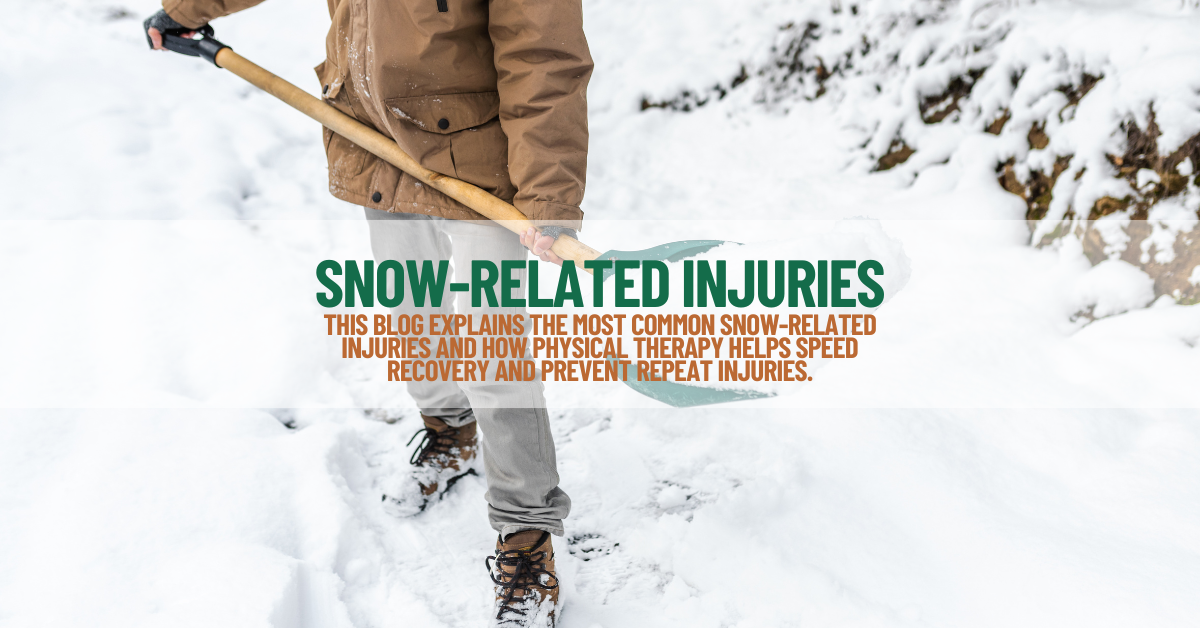

The 10 Most Common Snow-Related Injuries —Try Physical Therapy 1st
By Dr. John Mishock, PT, DPT, DC
When people think of winter injuries, they often picture ski slopes and snowboards. In reality, the largest volume of snow-related injuries occurs far from the mountains—on icy sidewalks, in driveways, and on winter roads. Emergency department and public health data consistently show that everyday winter activities account for far more injuries than recreational sports.
What are the most common snow-related injuries?
Below are the 10 most common snow-related injuries, ranked by incidence across the general population, followed by how physical therapy plays a critical role in treatment and prevention.
-
Motor-Vehicle Injuries on Snowy and Icy Roads
Car crashes during snow and ice conditions account for over 100,000 injuries annually in the U.S. Common injuries include neck and back strains (whiplash), shoulder injuries, rib trauma, concussions, and fractures. Many patients feel “mostly okay” initially, only to develop persistent pain, stiffness, dizziness, or headaches days later.
-
Slip-and-Fall Injuries on Snow and Ice
Same-level falls on icy surfaces are among the most frequent winter injury mechanisms, especially in adults over 40. These falls often result in fractures, sprains, and low back injuries and are a major driver of winter emergency department visits.
-
Wrist Fractures from Falls (FOOSH Injuries)
Falls on an outstretched hand are extremely common on snow and ice. Wrist fractures are the single most common injury associated with winter falls, particularly distal radius fractures. Without early motion and proper rehabilitation, stiffness and grip weakness can persist long after the bone heals.
-
Ankle Sprains and Ankle Fractures
Slipping on uneven or icy surfaces frequently causes ankle injuries. These range from ligament sprains to fibular fractures. Many “simple sprains” become chronic problems when balance, calf strength, and proprioception are not fully restored.
-
Shoulder Injuries from Falls
Shoulder sprains, rotator cuff injuries, dislocations, and proximal humerus fractures commonly occur when people fall sideways or try to catch themselves. These injuries are especially common in older adults and can significantly limit independence if not treated properly.
-
Hip and Pelvic Fractures
While less frequent than wrist or ankle injuries, hip fractures are among the most serious winter injuries. They are strongly associated with icy falls in older adults and carry high risks of long-term disability, loss of independence, and medical complications.
-
Snow Shoveling Injuries (Overexertion)
Each year, thousands of Americans are treated for snow-shoveling injuries, most commonly low back strains. Shoveling combines heavy lifting, twisting, fatigue, and cold exposure—an ideal recipe for musculoskeletal injury, especially in deconditioned individuals.
-
Cardiac Events Triggered by Snow Shoveling
Although not a musculoskeletal injury, cardiac events deserve mention. Snow shoveling is a well-documented trigger for heart attacks, particularly in middle-aged and older adults with cardiovascular risk factors. These events account for the majority of snow-shoveling-related deaths.
-
Snowblower Hand Injuries
Hand injuries from snowblowers—often caused by attempting to clear a clogged chute—include lacerations, fractures, and finger amputations. These injuries are severe, life-altering, and largely preventable.
-
Skiing and Snowboarding Injuries
While highly visible, winter sports injuries represent a smaller share of total snow-related injuries than falls or driving. Skiers most often injure the knee, while snowboarders more commonly injure the wrist and shoulder. Fatigue and poor conditions are major contributors.
How Physical Therapy Treats and Prevents Winter Injuries
Physical therapy is often the difference between “healed” and truly recovered.
Manual Therapy
Targeted joint and soft-tissue techniques help reduce pain, restore mobility, and normalize movement after falls, crashes, and overuse injuries. The goal is always functional improvement—not passive treatment alone. Class IV Laser Therapy:
High-power laser can be an effective adjunct for pain reduction and tissue irritability, particularly in acute sprains, strains, and post-traumatic soft-tissue injuries. It is most effective when paired with early movement and exercise.
Therapeutic Exercise
Exercise is the foundation of recovery:
• Early: restore motion, gait, and basic strength
• Mid-phase: rebuild load tolerance, balance, and endurance
• Late: return to work, daily activity, or sport with confidence
Patient Education
Patients are taught safe movement strategies, realistic healing timelines, and warning signs that require medical attention—especially after falls, car accidents, or head injuries.
Prevention
The highest return on investment comes from prevention:
• Proper footwear and traction on ice
• Safe shoveling techniques and pacing
• Balance and strength training for fall prevention
• Equipment safety education for snowblowers
• Conditioning and fatigue management for winter sports
The Bottom Line
Most winter injuries don’t happen on ski slopes—they happen at home, at work, and on icy roads. With early, evidence-based physical therapy, patients recover faster, reduce complications, and lower their risk of repeat injury. Winter may be unavoidable, but many of its injuries are not.
We can help!
If pain is limiting you from doing the activities you enjoy, give Mishock Physical Therapy a call: locations in Gilbertsville (610-327-2600), Skippack (610-584-1400), Phoenixville (610-933-3371), Boyertown (610- 845-5000), Limerick (484-948-2800) at www.mishockpt.com or request your appointment by clicking here.
Dr. Mishock is one of only a few clinicians with doctorate-level degrees in both physical therapy and chiropractic in the state of Pennsylvania. He has also authored two books; “Fundamental Training Principles: Essential Knowledge for Building the Elite Athlete”, “The Rubber Arm; Using Science to Increase Pitch Control, Improve Velocity, and Prevent Elbow and Shoulder Injury” both can be bought on Amazon or train2playsports.com.